 PACKAGING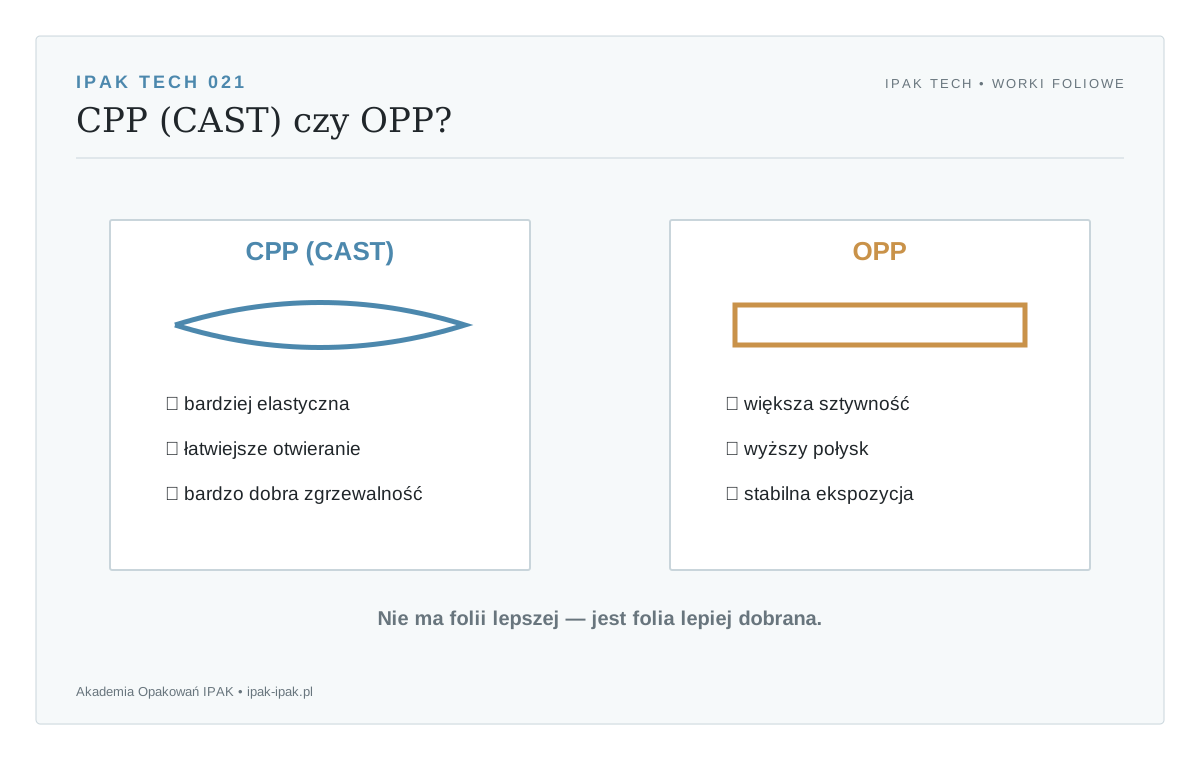
Start with the product and packing process
Film should not be chosen only by thickness or the appearance of a sample. The same film can behave differently depending on bag dimensions, seals, bottom gusset, perforation and the way the product is packed.
What is CPP (CAST)?
CPP is cast polypropylene film. In IPAK terminology, CPP and CAST describe the same material group. It is generally more flexible than OPP, seals well and performs reliably in wicket bags used for bakery packing.
- Good flexibility and handling during packing.
- Suitable for bottom-gusseted wicket bags.
- Good sealability.
- Available plain or printed.
What is OPP?
OPP is oriented polypropylene film. Orientation gives the film greater stiffness and a crisp, glossy appearance. It is often used where retail presentation and a more rigid bag are important.
- Higher stiffness and gloss.
- Strong product presentation.
- Suitable for straight bags, Euro-slot bags and retail display formats.
- Material selection must consider sealing and bag construction.
CPP (CAST) versus OPP
| Criterion | CPP (CAST) | OPP |
|---|---|---|
| Flexibility | Higher | Lower / more rigid |
| Typical appearance | Soft, practical | Glossy, crisp |
| Sealability | Very good | Depends on film structure |
| Typical application | Bakery wicket bags | Retail display and Euro-slot bags |
| Handling | Works well during fast packing | Provides stronger shape and display |
Typical applications
Choose CPP (CAST) when:
The bag must open easily, remain flexible and run efficiently in a bakery packing process, particularly in a wicket configuration.
Choose OPP when:
The package must be stiff, glossy and visually strong on the shelf, for example in retail display bags or Euro-slot packaging.
Film alone does not determine bag quality
Bag quality also depends on film thickness, seal parameters, dimensions, perforation, bottom gusset, winding and printing. A technically good film may still produce a poor package if the construction is wrong for the product.
Bag construction matters
- Wicket bag — often used for bakery products and fast packing.
- Bottom gusset — increases usable volume; 60 mm is a common bakery standard.
- Euro slot — enables hanging retail display.
- Perforation or holes — supports ventilation or presentation.
- Adhesive tape — selected for the intended closing method.
Common errors
- Treating CPP and CAST as two separate materials.
- Selecting film only by thickness.
- Ignoring the packing machine or manual process.
- Not specifying bottom gusset, wicket holes or Euro slot.
- Requesting print without attaching artwork.
Checklist before requesting a quotation
- Product to be packed
- Bag width and length
- Bottom gusset
- Film type: CPP (CAST) or OPP
- Wicket, Euro slot, perforation or tape
- Plain or printed
- Total order quantity
- Manual or automated packing
FAQ
Is CPP the same as CAST?
Yes. CPP is cast polypropylene film; the term CAST describes the manufacturing process.
Which film is better for bakery wicket bags?
CPP (CAST) is usually the first choice because of its flexibility and sealability, but the final specification should be confirmed for the product and equipment.
Can OPP bags be printed?
Yes. Print technology and ink system must be selected for the film and required run length.
Need help selecting CPP (CAST) or OPP?
Describe the product and packing method. We will recommend the film and bag construction.
Request a quote →